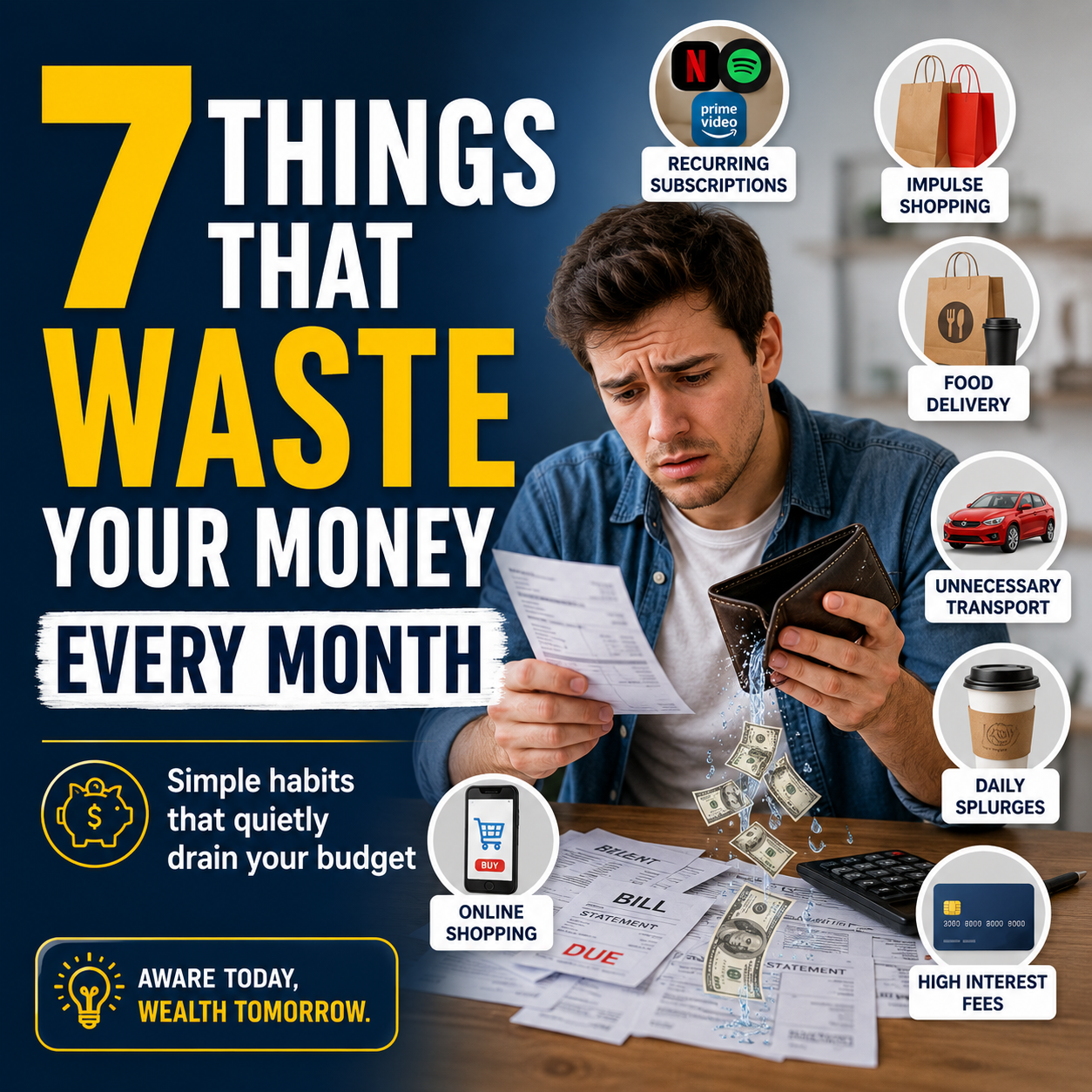
7 Things That Waste Your Money Every Month
Most people do not lose money because of one big mistake. They lose it slowly, through small habits repeated every month.
A coffee here, a subscription there, a delivery order when you are tired, or an impulse purchase that felt necessary for only five minutes. At the end of the month, these small expenses can become a serious problem.
The good news is simple: once you know where your money is leaking, you can stop it.
Here are seven common things that quietly waste your money every month.
1. Subscriptions You Forgot About
Streaming apps, music platforms, cloud storage, paid apps, gym memberships, and online tools can easily drain your budget.
The problem is not always the subscription itself. The problem is paying for services you barely use.
Check your bank statement and ask yourself:
Do I use this every week?
Is it really worth the monthly cost?
Can I cancel it and subscribe again later when I need it?
Even canceling two or three unused subscriptions can save you a surprising amount every year.
2. Impulse Shopping
Impulse shopping happens when you buy something without planning it.
Maybe it was a discount. Maybe it looked good online. Maybe you thought, “I deserve this.” But after a few days, the excitement disappears and the money is gone.
A simple trick is to wait 24 hours before buying anything that is not urgent. If you still need it the next day, then consider buying it.
Most impulse purchases disappear from your mind when you give yourself time to think.
3. Food Delivery Too Often
Ordering food is convenient, but doing it too often can become one of the biggest monthly money leaks.
Delivery fees, service charges, tips, and higher menu prices can make a simple meal much more expensive than cooking at home.
You do not need to stop ordering completely. Just reduce it.
Try preparing easy meals at home for busy days. Even simple options like sandwiches, pasta, rice, eggs, or salads can save a lot of money over time.
4. Buying Coffee and Snacks Every Day
A small coffee or snack may not feel expensive, but daily spending adds up quickly.
For example, if you spend a small amount every day, that becomes a large amount at the end of the month.
The goal is not to remove every small pleasure from your life. The goal is to be aware of how often you spend.
Try making coffee at home a few days per week, or set a weekly limit for small daily purchases.
5. Paying High Interest Fees
Credit cards, late payments, loans, and unpaid bills can cost you more than the original price.
High interest fees are dangerous because they grow quietly. You may think you are only paying a little extra, but over time it becomes a serious financial burden.
To reduce this problem:
Pay bills before the deadline.
Avoid buying things with borrowed money unless necessary.
Pay more than the minimum amount when possible.
Track your due dates.
Avoiding interest fees is one of the easiest ways to protect your money.
6. Online Shopping Because You Are Bored
Many people shop online not because they need something, but because they are bored, stressed, or looking for a quick feeling of happiness.
Online stores make buying too easy. One click, fast delivery, and constant discounts can make you spend without thinking.
Before buying, ask yourself:
Do I need this now?
Do I already own something similar?
Will I still want this next week?
Is this helping my life or just my mood?
This small pause can save you from many unnecessary purchases.
7. Not Tracking Your Expenses
If you do not know where your money goes, you cannot control it.
Many people are surprised when they finally check their monthly spending. Small expenses that looked harmless become a big number when added together.
You do not need a complicated system. You can use a notebook, a spreadsheet, or a simple budgeting app.
Track your money for one month. Write down what you spend and group it into categories like food, transport, subscriptions, shopping, bills, and entertainment.
Once you see the numbers clearly, you will know exactly what to fix.
How to Stop Wasting Money
You do not need to change everything in one day. Start with small actions.
Cancel one unused subscription.
Cook at home two more times this week.
Wait 24 hours before buying non-essential items.
Set a monthly limit for online shopping.
Pay bills on time.
Track your expenses for 30 days.
Small changes can create big results when you repeat them.
Final Thoughts
Wasting money does not always look obvious. Sometimes it hides inside normal daily habits.
The key is awareness.
When you understand where your money goes, you can make better decisions, reduce stress, and start building a stronger financial future.
Be aware today, so you can be wealthier tomorrow.